
Cross-docking
Cross docking moves goods straight from one vehicle to the next, either out to individual customers or on to the next distribution point. Products don't spend days in a warehouse. They pass through it just long enough to be unloaded, sorted or kitted, then go back out.
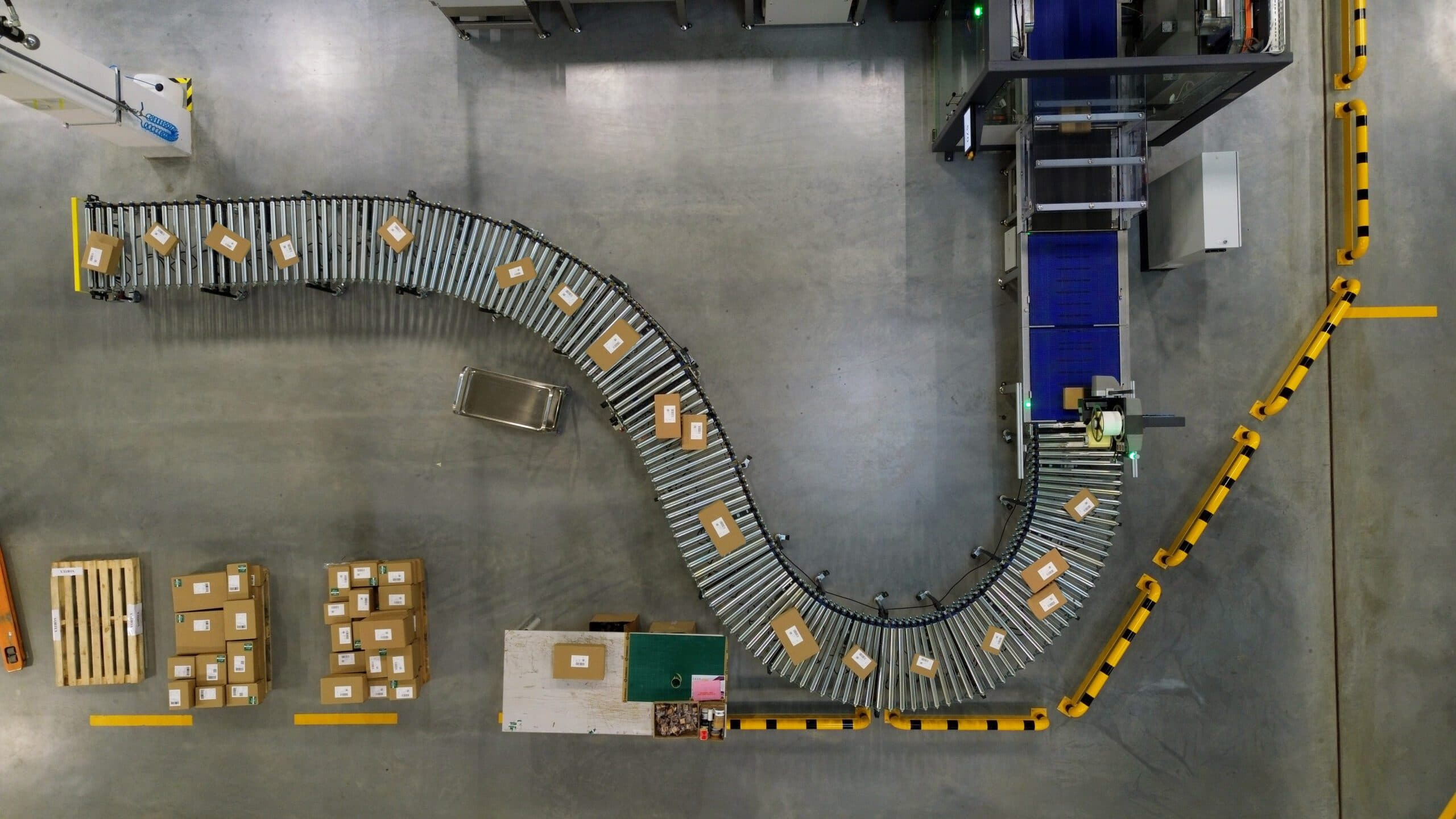
Single-touch and two-touch cross docking models
Cross docking comes in two basic models:
- Single-touch: Goods arrive at the warehouse, stay for a very short time and go straight back out.
- Two-touch: Products need light handling first, such as splitting into smaller shipments or adding promotional inserts. Even then, the process is far shorter than storing goods for weeks.
Cross docking matters most in e-commerce because online sellers run on fast turnover, frequent deliveries and a product range that shifts with the season or the current trend. Take long-term storage out of the picture and goods reach your customers sooner, without you paying to hold them in the meantime.
With cross docking, goods from a delivery can reach the end customer the same day, without ever sitting in the warehouse.
Why is cross docking essential for e-commerce growth?
Shorter delivery times
Online shoppers expect their orders to go out fast. Cross docking lets you ship just in time, almost the moment the manufacturer or wholesaler drops the goods off. You stop holding large buffers of stock; products simply pass through the warehouse for a quick sort and transfer.
Lower warehousing costs
Cross docking cuts the need for long-term storage, so you spend less on space and on staff. Goods that don't sit around are also less likely to get damaged, which counts most for fragile products and short shelf lives such as natural cosmetics. Less stock on site means a smaller insurance bill too, and less to lose if something breaks down or someone breaks in.
How does cross docking solve logistics problems?
Speed and reliability
For an e-commerce owner, hitting the promised date is everything. Customers won't wait weeks for a parcel; they expect it within 1 to 2 days. Cross docking gets you there, because nothing stalls in storage. Goods arrive from your supplier, your logistics partner sorts them, and they go straight back out.
Services that scale
Cross docking also makes a jump in sales far easier to absorb. If demand for your products multiplies for a few weeks, ahead of the holidays for example, you don't have to build a mountain of stock in advance. You just need delivery schedules that line up with your logistics operator.
Implementing cross docking in practice · tips and steps
Product range analysis
Start by working out which products suit cross docking. It works best for fast-moving goods with a relatively small number of variants, such as sizes or colors. If you sell t-shirts in 20 colors and 5 sizes, think about whether every variant should flow through cross docking, or whether some still need a small buffer of stock in the warehouse.
Organizing transport and schedules
Once you commit to cross docking, you need clear ground rules with your suppliers and carriers. Set a delivery schedule so your products aren't left waiting for the next truck, staff the warehouse around the hours deliveries land, and run a WMS (Warehouse Management System) that tracks every product from receipt to dispatch. That last piece counts double here: the operating window is short and leaves no room for guesswork.
Personalizing shipments in the cross docking model
Plenty of e-commerce owners assume fast shipping and personalized parcels pull in opposite directions: the more you add to each package, the slower packing gets. With cross docking, where goods spend only a short time in the warehouse, personalization doesn't have to slow anything down.
It comes down to how you organize the floor. Products can pass through a separate zone where the team slips receipts, marketing inserts or small gifts into each parcel in seconds. That work runs in parallel with unloading and sorting.

Cross docking and international logistics
As cross-border sales grow, more e-commerce businesses run into the problem of delivering quickly outside their home market. This is where cross docking fits, particularly inside the European Union. Because goods are transferred directly and never go into long-term storage, parcels move fast from one distribution point to the next until they reach customers abroad. In practice that means less paperwork, quicker customs clearance where it applies, and a lower risk of delays caused by goods piling up in warehouses along the way. Completio runs modern warehouses and a WMS that handles orders from several markets at once, so our clients scale in new countries without letting their delivery standards slip, whatever the season or the order volume.
Cross docking with Completio
Completio is a logistics operator that takes an innovative approach to e-commerce. We can build you a strategy around cross docking, which in practice means your goods move through the warehouse quickly and never go into long-term storage. Our WMS works with the major sales platforms, so we generate shipping labels automatically, track every parcel and keep order statuses in your store up to date. Our infrastructure and the way we work let us scale with the season. When the orders pile up, parcels still go out on time and your customers get them when you said they would.
Cross docking · a new method for the warehouse
Cross docking can change how your e-commerce logistics works. Orders go out faster, warehousing costs come down, and peak season gets easier to handle. It pays off most when you launch new products often and turnover is high. If your current logistics feels stretched and customers keep asking for shorter delivery times, cross docking is worth a look. Delivery time often decides the sale, and this is one of the few levers that moves it.
If you want help judging whether your business is ready for cross docking, talk to Completio. Our team will go through your product range, advise on the system integration and put together a delivery schedule that holds up, so you can spend your time growing the business rather than firefighting logistics. Your orders reach customers as fast as they expect, and you never have to sit on a warehouse full of stock.
From receipt to shipment the same day
Products don't sit in a warehouse for days. They pass through it only for as long as a quick transfer, sort or kitting job takes.
- receipt of delivery
- sorting and transfer
- kitting
- shipment the same day
pallets per day at the cross-docking peak
A delivery received in the morning passes through the transfer zone and leaves the outbound docks the same day, without shelving the goods.
See how much you can gain by switching
Fill out the form. We'll get back to you within 24h to talk about your business.
- A reply from our sales team within 24h
- Store integration in days, not weeks
- Real-time statuses in your store
Prefer to talk? +48 22 888 51 01
See how much you can gain by switching
We'll get back to you within 24h to talk about your business.